 Log in
 Sign up
Antimicrobial Resistance: From Genes to Global Crisis and the Role of Stewardship
Introduction: The Silent Pandemic of Superbugs
- Antimicrobial resistance (AMR), often described as the silent pandemic, is among the most urgent global health threats.
- The World Health Organization (WHO) estimates that AMR causes around 1.27 million deaths each year, a toll that could rise to 10 million annually by 2050 if unchecked.
- The financial burden is equally staggering, costing the U.S. healthcare system more than $100 billion annually, with similar impacts worldwide [WHO, 2023; CDC, 2022].
- Unlike sudden outbreaks, superbugs creep in slowly, undermining the effectiveness of antibiotics, antivirals, antifungals, and antiparasitic drugs. Infections once routinely treated, such as urinary tract infections or pneumonia, are increasingly difficult to manage.
- The solution lies in bridging molecular science with public health.
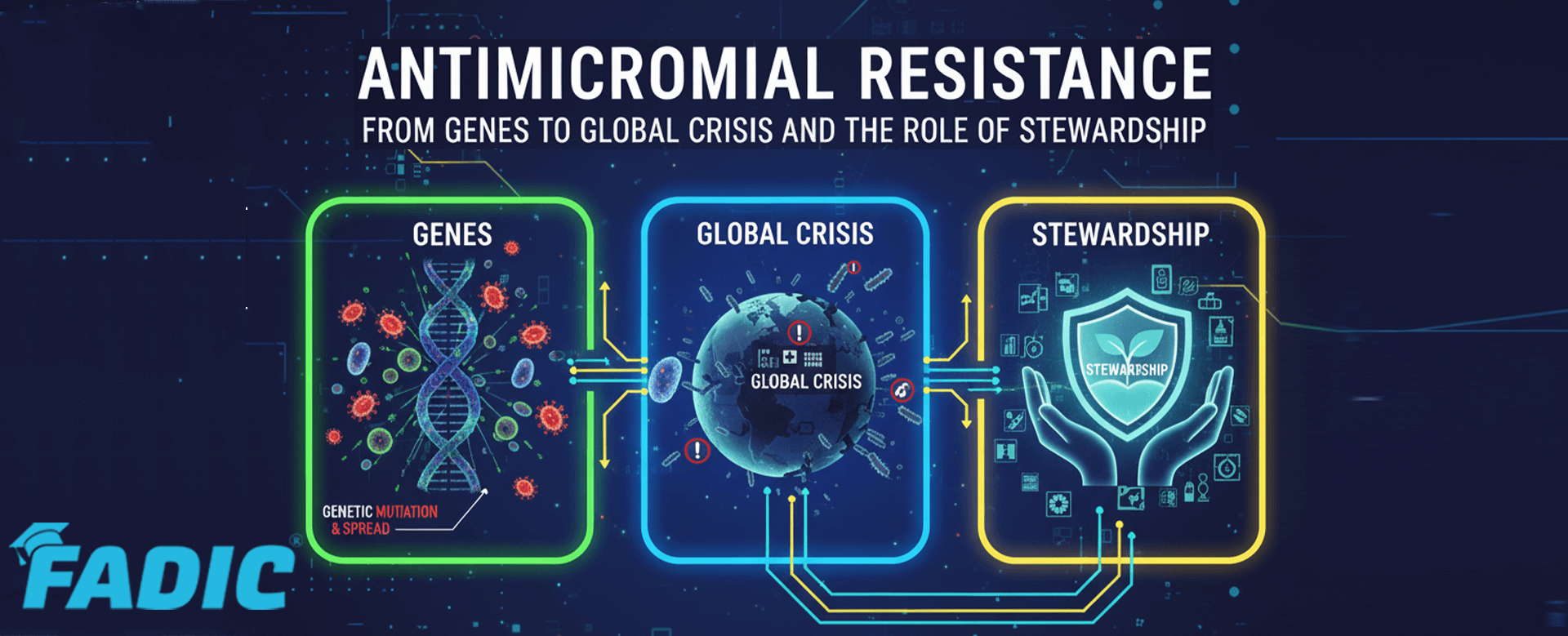
This article explores the genetic basis of resistance and its spread, the threat of ESKAPE pathogens and other WHO priority organisms, the role of antimicrobial stewardship programmes (ASPs), and the strategies, innovations, and policies shaping the future of antibiotic resistance. From Genes to Global Crisis and the Role of Stewardship
The Genetic Foundation of Antimicrobial Resistance
How Do Bacteria Become Resistant to Antibiotics?
- Bacteria acquire resistance through spontaneous mutations or by exchanging resistance genes via horizontal gene transfer. Mobile genetic elements such as plasmids, transposons, and integrons allow resistance to spread rapidly between species.
- At the molecular level, bacteria employ several defence mechanisms. Some produce enzymes such as beta-lactamases that destroy antibiotics before they act. Others modify their drug-binding targets—for example, methicillin-resistant Staphylococcus aureus (MRSA) alters penicillin-binding proteins to evade attack. Efflux pumps can actively expel antibiotics from bacterial cells, while changes to porin channels reduce drug entry altogether.
Environmental and One Health Factors
- Resistance is not confined to hospitals. Soil, agriculture, wastewater, and wildlife all serve as reservoirs of resistance genes. This underlines the One Health antimicrobial resistance perspective, which recognises the interconnectedness of human, animal, and environmental health in the fight against AMR.
From Laboratory Discovery to Global Crisis
- Resistance has shadowed every major antibiotic discovery. Resistance to penicillin emerged within a few years of its introduction in the 1940s. By the 1960s, MRSA had appeared, followed by vancomycin-resistant enterococci (VRE) in the 1980s and carbapenem-resistant Enterobacteriaceae (CRE) in the 2000s.
- Today, AMR causes millions of infections annually. The WHO warns that ESKAPE pathogens—Enterococcus faecium, Staphylococcus aureus, Klebsiella pneumoniae,
- Acinetobacter baumannii, Pseudomonas aeruginosa, and Enterobacter spp.—account for most hospital-acquired infections, with mortality rates often exceeding 30–50% in severe cases.
- The COVID-19 pandemic worsened the crisis. Widespread antibiotic overuse in viral cases, secondary bacterial infections in intensive care, and the suspension of stewardship programmes accelerated the global spread of resistance.
Priority Pathogens and Emerging Threats
- The WHO priority pathogens list places ESKAPE organisms at the top because of their ability to “escape” standard treatment. They cause life-threatening bloodstream and respiratory infections and frequently leave clinicians with few therapeutic options.
- Beyond ESKAPE, other pathogens are rising in prominence. Candida auris has proven resistant to multiple antifungal drugs, Neisseria gonorrhoeae has developed extensive resistance to antibiotics, and extensively drug-resistant tuberculosis (XDR-TB) continues to spread, threatening global TB control.
Antimicrobial Stewardship: The Key to Preserving Antibiotics
What Is an Antimicrobial Stewardship Programme?
- An antimicrobial stewardship programme (ASP) ensures that patients receive the right antibiotic, at the right dose, for the right duration. According to the CDC, stewardship improves outcomes, reduces resistance, and lowers costs.
Implementation Across Healthcare Settings
- In hospitals, stewardship can be integrated into electronic prescribing systems, with alerts and automatic stop-orders supporting safe use. Outpatient stewardship often involves delayed prescriptions, targeted patient education, and prescriber feedback. Long-term care facilities face unique challenges due to vulnerable populations and frequent infections, requiring close integration of stewardship with infection prevention. Paediatric programmes aim to reduce unnecessary antibiotic use in viral respiratory infections.
Multidisciplinary Collaboration
- Successful ASPs rely on collaboration. Infectious disease specialists, pharmacists, microbiologists, and infection prevention experts must work together to monitor and refine antibiotic use, ensuring stewardship becomes a routine part of clinical practice.
Global Policies and the One Health Approach
- The WHO Global Action Plan on AMR, launched in 2015, set out a framework for national strategies. Many countries have developed their own plans, although low- and middle-income nations often face barriers such as weak laboratory capacity and limited funding.
- A One Health approach is essential. Tackling resistance requires interventions not only in hospitals but also in veterinary medicine, agriculture, and the environment. Reducing antibiotic misuse in farming, regulating pharmaceutical waste, and monitoring wastewater are critical steps in reducing the spread of resistance genes across ecosystems.
Innovation and the Future of Antibiotic Resistance
- The future of antibiotic resistance depends heavily on investment in new tools and approaches. The antibiotic pipeline remains thin due to weak economic incentives, but push–pull funding models offer hope for stimulating development.
Advances in rapid diagnostics, including AI-driven platforms, allow clinicians to identify pathogens more quickly and prescribe with precision. Alternative therapies, from bacteriophages to immunotherapies and microbiome restoration, could reduce dependence on traditional antibiotics. Meanwhile, precision medicine, guided by genomics, promises tailored treatments based on both patient and pathogen profiles.
Case Studies: Success in Stewardship
- Evidence demonstrates the impact of stewardship. At the Mayo Clinic, broad-spectrum antibiotic use fell by 25% after stewardship interventions. The Netherlands consistently reports some of the lowest antibiotic consumption rates globally, reflecting effective national strategies. In the United States, coordinated hospital action successfully contained outbreaks of CRE, preventing wider regional spread.
Challenges and Barriers
- Despite clear benefits, stewardship faces obstacles. Programmes often lack funding, face resistance from prescribers, or operate without adequate data systems. Globally, low- and middle-income countries remain at a disadvantage, struggling with access to diagnostics, surveillance, and treatment. A central challenge remains balancing the needs of individual patients with broader population-level goals of reducing resistance.
FAQs: Featured Snippet Optimisation
What is antimicrobial resistance?
- AMR occurs when bacteria, viruses, fungi, or parasites evolve to resist the drugs designed to kill them, making infections more difficult to treat.
How do bacteria become resistant to antibiotics?
- They adapt through mutations or exchange of resistance genes using plasmids, transposons, or bacteriophages.
Conclusion
- Antimicrobial resistance represents both a genetic inevitability and a failure of human systems. It endangers modern medicine, from cancer treatment to routine surgery.
- Yet solutions exist: antimicrobial stewardship programme implementation, global One Health approaches, and sustained international collaboration can preserve the effectiveness of antibiotics.
- The fight against superbugs requires urgent investment, strong policy, and global solidarity. From Genes to Global Crisis and the Role of Stewardship
Read More:
- 10 Skills You Must Learn to Do Research via Google ScholarThe Most Common OTC Resource
- Register Now at FADIC Clinical Research School
- Buy FADIC Toolkit for Writing Research to Write a Great Research PaperThe Most Common OTC Resource
- Read 10 Skills You Must Learn to Do Research via Google Scholar in Arabic
- The FADIC Online Continuous Medical Improvement Programs & Mini-Courses.The Most Common OTC Resource
- Check Now the FADIC Book store and Buy books in different specialities.
- Check Now about Coronavirus Resource Information Center.The Most Common OTC Resource
- Simple random sampling: Definition, examples, and how to do itThe Most Common OTC Resource