List of the Most Common Antihistamine Medications
List of the Most Common Antihistamine Medications
\
The Most Famous 2 most Commonly Known Antihistamine Medications are:

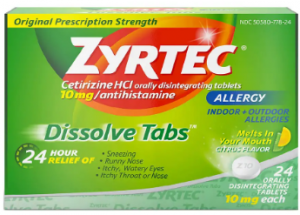
Cetirizine

- Brand Names: Zyrtec
- Therapeutic Category: Histamine H1 Antagonist, Antihistamine
- Dosage Forms: Oral / Tablet, Solution
- Use: Labeled Indications: Antihistamine
- Allergic reactions: Temporarily relieves symptoms of upper respiratory allergies; relieves itching due to urticaria.
- Off Label: Anaphylaxis/ Angioedema, acute allergic or recurrent
- Dosing : Adult : Oral: 10 mg once daily
- Pediatric: Infants 6 to <12 months: 2.5 mg once daily
- Children 12 to 23 months: Initial: 2.5 mg once daily; dosage may be increased to 2.5 mg twice daily
- Children 2 to 5 years: Initial: 2.5 mg once daily; dosage may be increased to 2.5 mg twice daily or 5 mg once daily; maximum daily dose: 5 mg/day
- Dose Adjustments
- Renal Impairment: No dosage adjustment
- Hepatic Impairment: No dosage adjustment
- Adverse Drug Interaction:
Headache/ drowsiness / fatigue / nervousness/ Xerostomia - Pharmacodynamics/Kinetics:
- Half-life elimination: Children: 6.2 hours; Adults: 8 hours
- Time to peak, serum: 1 hour
- Onset of action: 0.7 hours
- Important Notes:
- CNS depression: May cause CNS depression, which may impair physical or mental abilities; patients must be cautioned about performing tasks which require mental alertness
- Pregnancy & Lactation: Pregnancy Risk factor B / present in breast milk
- Medication Safety Issues:
- Cetirizine may be confused with sertraline, stavudine
- ZyrTEC may be confused with Lipitor, Serax, Xanax, Zantac, Zerit, Zocor, ZyPREXA

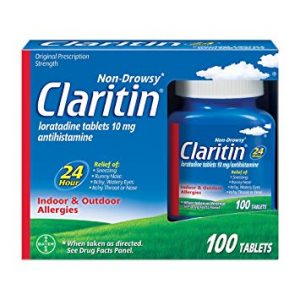
Loratadine

- Brand Names: Claritin
- Therapeutic Category: Histamine H1 Antagonist, Antihistamine
- Dosage Forms: Oral / Tablet, Solution
- Use: Labeled Indications: Allergic rhinitis/ Urticaria
- Dosing : Adult : Seasonal allergic rhinitis, urticaria: Oral: 10 mg daily once daily or 5 mg twice daily
- Pediatric: Allergic symptoms/rhinitis: Oral
- Children 2 to <6 years: Oral liquid or chewable tablet: 5 mg once daily
- Children ≥6 years and Adolescents: Oral liquid, capsule, tablet, or chewable tablet: 10 mg once daily
- Dose Adjustments
- Renal Impairment: CrCl 10-50 mL/minute: Recommended dose every 24 to 48 hours.
- CrCl <10 mL/minute: Recommended dose every 48 hours.
- Hepatic Impairment: No dosage adjustment
- Adverse Drug Interaction:
Headache/ drowsiness / fatigue / nervousness/ Xerostomia - Pharmacodynamics/Kinetics:
- Onset of action: 1-3 hours
- Peak effect: 8-12 hours
- Duration: >24 hours
- Half-life elimination: 8.4 hours
- Important Notes:
- Loratadine is a nonsedating antihistamine. Because of its low incidence of side effects, it seems to be a good choice in the elderly
- The FDA does not recommend OTC uses for cold products in pediatric patients <2 years of age and recommends to use with caution in pediatric patients ≥2 years of age.
- Pregnancy & Lactation: Pregnancy Risk factor B / present in breast milk
- Medication Safety Issues:
- Claritin may be confused with Clarispray, clarithromycin
- Claritin (loratadine) may be confused with Claritin Eye (ketotifen)
Read More:
Copyright ©: All content on FADIC Website, including medical opinion and any other health-related information, and drug Informtation is for informational purposes only

 Log in
 Sign up